12 September 2005

A Must-Hear Sermon!


This sermon comes from a missionary, Paul Washer, who passionately uncovers a deadly error common among those who call themselves Christians. Laura & I were in attendance in this meeting with our students from Malvern Baptist Church in the summer of 2002. "Scortched Ground" is all I can say folks. Please check out the link below (to my accountability partner's website) to see what I'm talking about.

Sermon by Paul Washer
Director, Heart Cry Missionary Society
July 26-27, 2002
Youth Evangelism Conference
Montgomery, AL

08 September 2005

"Seeker" Sensitivity & Centeredness


I highly recommend the following link to a good article related to the topic of "seeker" sensitivity. We are called to be "Seeker" sensitive; however, we must also remember that there is but 1 Seeker -- His name is God! Here is that link:


http://www.str.org/free/commentaries/misc_topics/seekerce.htm

06 September 2005

A Concise Summary of the Sovereignty of God in Salvation


Please click on the following link to access a very helpful piece on the "Sovereignty" and "Providence" of God in salvation. The papers that the link will bring you to are used by permission of Desiring God Ministries.


http://www.desiringgod.org/cgi-bin/print.cgi?http://www.desiringgod.org/library/topics/doctrines_grace/summary.html

http://www.desiringgod.org/library/topics/doctrines_grace/tulip.html

20 August 2005

S.T.S. 1.6 [Featured Resource]


The Baptist Catechism Set to Music
[by Jim Scott Orrick]

Synopsis: Throughout history, God’s people have used music as a means to memorize and meditate upon truth. Jim Orrick has provided a most helpful resource by setting the Baptist catechism to song. In this 2-CD collection are content-rich lyrics that will benefit both children and adults.

S.T.S. 1.6 [Main Article]


“Rightly Dividing the Word of Truth: a Primer on Biblical Interpretation”


In this edition of Scratching the Surface you will be hearing from my dear brother in the Lord and accountability partner, Daniel Copeland. Allow me to briefly introduce you all to Daniel. When I served at FBC – Perry, FL, Daniel was the worship leader who lead and guided the student worship band in PowerSource, our Wednesday night service. In fact, Daniel serves in that capacity to this very day. Daniel will recall that I referred to him quite often as the “James Taylor” of worship leaders. I would say that “the world has James Taylor . . . but PowerSource has Daniel Copeland.” I kid you not, Daniel sounds like James Taylor. In any event, Daniel is my “iron” who sharpens me on a regular basis from the Word and unto the glory of God. He tells me things that are uncomfortable but that are needed . . . oh, that all of you would have such a friend. Daniel is also one of the most sound and sharp theologians and Christian philosophers that I’ve come across in my days (including all of my professors at B.C.F.). I thank God for him. In all of this, however, Daniel would tell you that truth didn’t originate with him, and that it won’t die with him either. Daniel is merely a vessel of honor through whom the Lord moves for His good purposes and pleasure. He is a man of the Word, a wonderful husband to his wife, and a strong father to his two precious daughters. He is indeed a man after God’s own heart. With that said, I pray that you’d here him prayerfully.

___________________________________________________________________

[the following is an edited e-mail correspondence]


Greetings Jane and All,

I thought it good to move on in this e-mail to discuss some principles of interpretation. I do this in preparation for dealing with the scriptures which Jane has previously mentioned and which seem to indicate truths contrary to what I have already discussed. This won't be a full exploration of the topic of Biblical interpretation (hermeneutics), but it should certainly help us in dealing with the texts that are in question.


-The Economy of Scripture-
Imagine if you had to be exactly specific about everything you wished to communicate in conversation so that it would be impossible to misunderstand what you were saying - even if the statements were taken out of context. Try it for a while, and you will see that the communication becomes so tedious and cumbersome, that you might rather say nothing at all. This is the way language is. We use words like "this, all, none, those..." to refer to concepts we have previously referred to in the conversation in order to minimize having to repeat ourselves over and over again. We depend heavily on context to enable the person we are communicating with to know the full meaning of the words we are speaking. For example, I have purposefully used the greeting: "Jane and All" in preparation for this point! Do you see that you must lean on context to understand what I mean by the unqualified word "all"? All what?


All people in the world?

All who read this email?

All to whom this email was addressed initially?

All elephants and fuzzy bunnies?


Thus, without context, the statement by itself is meaningless. Now, there IS a definite way to communicate truth more precisely, and that is in the form of propositions. A proposition is a truth statement which either affirms or denies something and which is either true or false. Here’s one example: “All men are mortal.” This proposition states a definite relationship between a subject and a predicate. For a proposition to be meaningful, however, all of its terms must be precisely defined. Let’s carry our example further to stress and illustrate what I have been saying thus far. I’ll put my greeting in propositional form....


Proposition #1: All initial recipients of this email are addressed and greeted by Daniel Copeland, son of Roy Copeland.

Proposition #2: In particular, Jane Doe, daughter of John Doe, is addressed and greeted by Daniel Copeland, son of Roy Copeland.

___________________________________________________________________

Definitions:

To Address - To indicate one as the object of communication.

To Greet - To offer an expression of good will.

E-mail - A form of electronic communication

In Particular - To single out or stress.

Daughter - A female, direct descendant of.

Son - A male, direct descendant of.

Initial - First. Not second hand.

___________________________________________________________________

At this point, you might be growing nauseated, so I will leave it at that. I hope you can begin to see how wise it was for God not to communicate to us in this way. Though it would have eliminated a lot of potential confusion, we would not be able to bring our Bibles to church or perhaps afford them or perhaps even fit them into our houses. Rather, in wisdom, God has been very economical in His use of words so that He can communicate a lot of truth to us in a compact form . . . and we thank Him for this!


-Interpretation-
So then, God has provided us a whole lot of information in a compact form....but we must do the work of unpacking this information into a more propositional form so that we can clearly understand it. This is the work of interpretation. Interpretation is not the act of deciding what we would most like for a passage to mean. Interpretation is not imposing meaning onto a passage that cannot yield its own precise meaning. Rather, interpretation is the process of conclusively determining by context, cross-reference, and other valid interpretive methods, precisely what God intends to communicate by the passage so that you could put its meaning into propositional form should you need to. The following are some relevant scriptures:


"Be diligent to present yourself approved to God as a workman who does not need to be ashamed, accurately handling the word of truth" -2 Timothy 2:16

"But know this first of all, that no prophecy of Scripture is a matter of one's own interpretation"
-2 Peter 1:20

"See that you do all I command you; do not add to it or take away from it.
-Deuteronomy 12:32


So, here we see Scriptural justification for my points above. First, the Scriptures require accurate handling (careful unpacking). To do this we must be diligent and work hard. Second, the Scriptures are not meant to be used to express one's own personal interpretation of what they mean. We shouldn't pass scriptures around in Sunday School and let everyone tell each other what that Scripture means to them. If we can't provide adequate reason to interpret a passage a certain way, we should NOT just invent our own personal, preferred meaning. Otherwise, we might be doing what the third scripture above prohibits . . . we might be imposing a meaning and thereby "adding to it" or "taking away from it". God does NOT take lightly to such carelessness.

Now, with a better understanding of what true interpretation is, I would like to address something Jane said in her initial e-mail.


Jane: "I'm not at all angry or mad at you for you not seeing things my way. It's all a matter of interpretation."


It's not completely clear to me what Jane meant by the latter statement; however, I want to be sure to address something that she could have meant - an idea that is all too common among modern believers. She could have meant to say that there is no way to be sure of what the right answer is on this issue, so it's just a matter of deciding what each of us wants to believe. That idea is what I want to warn us all not to adopt. Rather, I would encourage us to strive toward "sound doctrine". On the average, believers are way too sloppy with their beliefs so that they are easily persuaded by and tolerant to divergent viewpoints. This is the very opposite of how we should be Beloved. Consider the following verses:


"As a result, we are no longer to be children, tossed here and there by waves and carried about by every wind of doctrine"
-Ephesians 4:14

"Holding fast the faithful word which is in accordance with the teaching, so that he will be able both to exhort in sound doctrine and to refute those who contradict."
-Titus 1:9

"I felt the necessity to write to you appealing that you contend earnestly for the faith which was once for all handed down to the saints."
-Jude 1:3

"In all things show yourself to be an example of good deeds, with purity in doctrine."
-Titus 2:7


According to the above scriptures, we are to be pure in doctrine, able to withstand strong winds of false teaching, and ready to refute and contend with those [especially in the church] who espouse false teachings. It should be our aim to become fully convinced of the essential doctrines of the Christian faith.


You, however, continue in the things you have learned and become convinced of."
-2 Timothy 3:14


This is not to say that there are not non-essential, questionable matters that can arise. At the same time, however, doctrines concerning the nature and attributes of God and men, how salvation is activated and accomplished, and how God relates to the world He has created are all important and essential matters that the Scriptures have numerous teachings on. Therefore, we must labor diligently to understand, weigh, and accurately handle the matters these emails are concerning . . . "until we all attain to the unity of the faith, and of the knowledge of the Son of God" [Eph 4:13]. With this in mind, let us proceed not with the idea that it's all just a matter of interpretation, but rather with the idea that it is a matter of pure doctrine. Though we may not fully attain in this, brothers and sisters, let us keep pressing on.


-Context, Cross-Referencing, and the Unbroken Scriptures-
Resolved to do our diligence to accurately handle the Scriptures, let us look now to three principles which will help to guide us in this.

1. The Scripture Cannot Be Broken:

Jesus answered them,

"Has it not been written in your Law, `I SAID, YOU ARE GODS'? If he called them gods, to whom the word of God came (and the Scripture cannot be broken), do you say of Him, whom the Father sanctified and sent into the world, `You are blaspheming,' because I said, `I am the Son of God'?”
-John 10:34-36

In the above passage, the Pharisees were taking up stones to stone Jesus for indicating that He was the Son of God. The Pharisees believed such a statement was blasphemy according to Scripture. Jesus rebuked their misunderstanding of Scripture by highlighting a verse which would contradict their faulty understanding, and by insisting that "the Scripture cannot be broken".

This is a critical principle in interpretation. As we strive to unpack the Scripture, we must never unpack it in such a way as to create a contradiction which would "break" the Scripture. Therefore, if a certain possible understanding of a scripture contradicts some other truth of Scripture, then we are safe and required to dismiss that possible understanding - even if at first glance it seems to be the most intuitive understanding of the passage. Let's look at another example to illustrate this principle. In Matthew 5, we find the following instruction.

"Give to him who asks of you, and do not turn away from him who wants to borrow from you."
-Matthew 5:42

At first glance, the meaning of this verse seems a bit absolute. It seems to say that under no exception are you to turn away someone who asks something of you or wishes to borrow something from you. However, if we understand that the Scripture also commands . . .


"If anyone is not willing to work, then he is not to eat either."
-2 Thessalonians 3:10

"But refuse to put younger widows on the list [to receive financial support]."
-1 Timothy 5:11


. . . then we know that there are exceptions to when we are required to give to those who ask us. Therefore, we cannot understand the Matthew 5:42 passage to say there are no exceptions, and we can safely throw out the "no exceptions" interpretation since failing to do so would result in a contradiction.


2. Context:

There is so much that could be said about context. As we have already discussed, language can be imprecise at times. Often, in common language, we use the same word to mean different things in different contexts. For example: “Gee . . . that was a gay affair indeed!” What am I saying??

Often we do not fully qualify the statements we make by listing the exceptions, or who the intended audience is, etc. Rather, these details are assumed to be understood from the context. As a result, a single statement, when isolated from its context, can become very ambiguous or can completely lose its meaning.

Let's consider an example of this very thing. Imagine receiving a nice card in the mail for your birthday and on it was this scripture verse . . .


"I will multiply your descendants as the stars of heaven, . . . and by your descendants all the nations of the earth shall be blessed."
-Genesis 26:4


Sound kind of strange? I think so!! However, why would the average believer not think it strange to find this verse instead?


"'For I know the plans that I have for you,' declares the LORD, 'plans for welfare and not for calamity; to give you a future and a hope."
-Jeremiah 29:11


Just as the first verse was contextually addressed to Abraham, the second verse was contextually addressed to “all the exiles whom I have sent into exile from Jerusalem to Babylon" [Jer. 29:4]. Just seven verses above that famous feel-good passage, the intended audience is plainly given. Why then do most believers have no problem taking it out of context, and even, at times, go so far as to quote it to an unbeliever as a proof text that God means to do them good? Taking things like this out of context is very dangerous.

Let's look at what happens when we apply this verse to everyone. First, by applying this verse to everyone, we are saying that God has plans "for welfare and not calamity" for every human being. However, since we know that every human being doesn't end up well off, and many, in fact, will reap the ultimate calamity, we make it sound like God is not able to accomplish what He plans. This verse was meant to bring overwhelming comfort to the exiles in the face of great distress. It was meant to give them assurance, but we just took that assurance away from them. Second, what do you suppose an unbeliever thinks when he is shopping for a card and sees that verse, and then goes home and watches the news? He probably justifies himself in believing that "religion is a crutch" used to just make people feel better. He probably doesn't think we worship a faithful and promise-keeping God. Third, by applying this verse to everyone, we imply something about God. We imply that there are things God plans or wishes that He doesn't accomplish. We imply that God's plans are dependent on us for them to happen. How is such a concept supposed to be comforting? If we really think about it, when this verse is misapplied to everyone, it means "Don't mess up the plans I have for you!”

Thankfully, we have other scriptures on hand to help us destroy this threatening heresy.

“To man belong the plans of the heart, but from the Lord comes the reply of the tongue.”
-Proverbs 16:1

“The Lord works out everything for His own ends – even the wicked for a day of disaster.”
-Proverbs 16:4

“In his heart a man plans his course, but the Lord determines his steps.”
-Proverbs 16:9

“The lot is cast into the lap, but its every decision is from the Lord.”
-Proverbs 16:33

"Many plans are in a man's heart, but the counsel/purpose of the LORD will stand."
-Proverbs 19:21

“The king’s heart is in the hand of the Lord; He directs it like a watercourse wherever He pleases.”
-Proverbs 21:1

“The horse is made ready for the day of battle, but victory rests with the Lord.”
-Proverbs 21:31

"The LORD of hosts has sworn saying, 'Surely, just as I have intended so it has happened, and just as I have planned so it will stand."
-Isaiah 14:24

"For the LORD of hosts has planned, and who can frustrate {it?} And as for His stretched-out hand, who can turn it back?"
-Isaiah 14:27

“I form the light, and create darkness: I make peace, and create evil: I the LORD do all these things.”
-Isaiah 45:7


So then, the next time someone quotes that verse out of context, let it serve to remind you how dangerous being so careless can be. By one simple movement, you could nullify a promise, cause unbelievers to blaspheme, and generate a heretical contradiction. Oh Lord, please teach us to fear.


"Let not many of you become teachers, my brethren, knowing that as such we will incur a stricter judgment."
-James 3:1


3. Cross-Referencing:

We have already seen this principle in action, so let me just say a few words about it. Often the meaning of a certain part of a text is seemingly ambiguous or uncertain. It is in these moments that we need to look elsewhere in Scripture to see if we can eliminate some of the ambiguity. We did this in the above examples, as we used other scriptures found elsewhere in the Scripture to defeat certain possible understandings of the scripture in question.

You will find that often God repeats Himself in various parts of the Scripture and in various ways of speaking so that we can be sure to get the point. As we put all of the relevant references together, the ambiguity disappears. Therefore, being familiar with the whole of Scripture is one of your best defenses against error. In much the same way, many bank tellers are trained on how to spot a counterfeit simply by meticulously studying the real thing.

It's relevant to point out that every scripture is written in the context of the entire Bible, thus the meaning of each scripture is potentially influenced by every other scripture. Sometimes a New Testament passage helps us understand an Old Testament passage, and visa versa. That is part of the awesome beauty of the Scripture. It speaks with one voice when properly heard and interpreted.


-The Primacy of Theological Study-
I'd like to briefly step up onto a soapbox to address something that concerns the entire body of Christ. The kinds of mishandling of Scripture we have been discussing are quite common in Christendom - even among those who like to think of themselves as people who revere Scripture. It is all too common for Scripture to be mishandled and misapplied - not only by laypersons, but also by the leadership. The confusion that results from such casual handling of God's Word leads to intellectual despondency in believers.

Paul warned that . . .


"The time will come when they will not endure sound doctrine; but wanting to have their ears tickled, they will accumulate for themselves teachers in accordance to their own desires."
-2 Timothy 4:3


Although the day Paul speaks of may not yet have fully dawned, I believe a similar situation is upon us. Many believers today will not endure sound doctrine, because they do not think it exists. It is easy to see why this is so when so many voices quoting the Scripture say unorganized, over-generalized, and often contradictory things. Believers rarely learn for themselves how to carefully and accurately handle the Word, and soon get the subtle notion that the truth is beyond their ability to grasp with certainty and something which only God or "scholars" can know. As an anti-intellectual mindset grows in them, it is little wonder that they would "accumulate for themselves teachers in accordance to their own desires." That is, if you can't be taught with authority, you might as well pick the teacher whose message you like the most. This lack of understanding in the people of God is lamentable. In Hosea, God rebukes the priests of Israel saying . . .


"My people are destroyed for lack of knowledge. Because you have rejected knowledge, I also will reject you from being My priest. Since you have forgotten the law of your God, I also will forget your children."
-Hosea 4:6


I would not be surprised if this is still our Lord's lament today. Notice in the following relevant passages how our Lord responds with contempt towards dullness to Scripture and the things of God.


"Jesus answered and said to him, 'Are you the teacher of Israel and do not understand these things?'"
-John 3:10
"Have you not even read this Scripture: `THE STONE WHICH THE BUILDERS REJECTED, THIS BECAME THE CHIEF CORNER STONE?"
-Mark 12:10

"You are mistaken, not understanding the Scriptures nor the power of God . . . but regarding the resurrection of the dead, have you not read what was spoken to you by God . . ."
-Matthew 22:29,31

"Are you so lacking in understanding also? Do you not understand that whatever goes into the man from outside cannot defile him?"
-Mark 7:18

"How is it that you do not understand that I did not speak to you concerning bread?"
-Matthew 16:11


My fellow heirs in Christ, look around you. Opinion abounds, but truth is obscured. What good does our zeal do us, if we lack the knowledge to guide it? What good is our worship if we don't have an intimate knowledge of the attributes, purposes and ways of our object of worship? In fact, true knowledge (and I am not talking about warm, fuzzy feelings, but real intellectual
knowledge) logically precedes true worship . . .


"For I delight in loyalty rather than sacrifice, and in the knowledge of God rather than burnt offerings."
-Hosea 6:6

". . . the true worshipers will worship the Father in spirit and truth."
-John 4:23


If the above is truly the case, then our priorities in the church are way out of whack, because we obviously fail to educate our members beyond the "elementary" things. We indirectly send the message to our congregations that "higher" levels of learning and thinking about the things of God are for the few gifted ones. In fact, we have to send our members to special colleges to gain such knowledge. Many today unquestionably speak about balance in our emphasis between worship, discipleship, evangelism, ministry, and fellowship. Perhaps they mean to say that we should not neglect any of these areas which is true; however, what I am saying is that it is not Scriptural at all to attempt to equally balance these areas emphatically. Rather, it is Scriptural to make discipleship primary. Read Luke 10:39-42:


"She had a sister called Mary, who was seated at the Lord's feet, listening to His word. But Martha was distracted with all her preparations; and she came up to Him and said, "Lord, do You not care that my sister has left me to do all the serving alone? Then tell her to help me." But the Lord answered and said to her, "Martha, Martha, you are worried and bothered about so many things; but only one thing is necessary, for Mary has chosen the good part, which shall not be taken away from her."
-Luke 10:39-42


Here you find Jesus sets straight where the priority lies . . .

It's not in service (ministry) -- otherwise Martha would have chosen the good part.

It's not in fellowship -- otherwise the priority would have been for Jesus and Mary to both help Martha so they could all sit down and enjoy each other's company.

It's not in evangelism -- we often neglect to mention that the Great Commission is not to make converts, but to make disciples and to teach them.

It is not in worship either, as we have already shown.


What Mary chose and what Jesus said was necessary was "listening to His word.” Jesus was teaching Mary. He was educating her in the things of God. May we abandon the spirit of practicality that indoctrinates our culture with the philosophy, "You learn by doing". May we deny the notion that theological study is important only in so far as it is practical. Look at the apostolic letters. Do they begin with practical application or theology? Are they dominated by practical application or theological substance. You will find that it is the latter. In Romans, in fact, you don't get to the practical teaching until chapter 12, and even then Paul starts the chapter by pointing out that the transformation of behavior occurs by the renewing of your mind!

The church has lost a sense of what it means to "set your mind on things above". It doesn't mean constantly trying to image what Jesus is doing in heaven, or some illusive, mind-numbing state of consciousness. It means being a nerd for God!!! It means working at thinking about the attributes, purposes, precepts, commands and teachings of God so that we come to the place that we can "prove what the will of God is" [Romans 12:2].

Finally, to complete this encouragement let me simply quote the apostle Paul:


"Brethren, do not be children in your thinking; yet in evil be infants, but in your thinking be mature."
-1 Corinthians 14:2


So then, with all that said, I would like to thank you all for being willing to entertain this discussion. I believe the more we know with confidence about the character and nature of God, the better off we will be. Also, I would like to encourage discussion in these things. Let me make clear that the floor is open for questions or comments. If you are reading this and would like a question answered, or something clarified, or a stronger defense of one of my points (or for an obvious implication of said points), please send your question on to the following e-mail address: dcopeland@syntech-fuelmaster.com.


Regards and Love to All,


Daniel

S.T.S. 1.6 [Point to Ponder]


Here’s one question that frequently stops Christians in their tracks: "If the Gospel alone saves (and it does), then what about the heathen in Africa who never heard? What about that native in some remote, unreached people-group? Can God justly convict a man who hasn't heard about Jesus? Some people hear the Gospel and reject it, but most never hear it. How can God condemn them?”

Christians are ill-equipped to respond because they don't really understand something vital about sin, grace, and mercy. Sin brings guilt. Grace and mercy are gifts. Anyone who is a sinner receives punishment he deserves. Anyone who is saved receives mercy he does not deserve and which is not owed him.

Think of this question: How could the sheriff send anyone to jail if he didn't offer him a pardon first? The answer is simple. If he's guilty, the sheriff is justified in throwing him in jail. There is no obligation to offer a pardon to a guilty man.

The same is true of God. He can justly convict a man who has broken His law even though the sinner has heard nothing about God's pardon in Jesus. God owes no one salvation. He can offer it to whomever He wishes. That's why it's called grace.

Why don’t you just stop what you’re doing right this moment and sing (or pray) the words to that old hymn, “Amazing Grace?” These sobering thoughts should cause you to realize just how blessed you truly are. Thank You, Father, for your undeserved grace and mercy. How could I ever be the same again? I bless Your Name, oh Lord my God.

S.T.S. 1.6 [Closing Comments]


Ahhh . . . THEOLOGY . . . that dirty, 4-lettered “T” word in evangelical circles . . . you know, the one that tends to make folks a bit uncomfortable . . . the one that causes division. After all, it’s not that conducive to the current trend towards seeker-sensitivity. You’re right in one sense – theology can be divisive in nature in that it divides truth from error. That, brothers and sisters, is an extremely vital division that we must be making as modern Believers in the 21st Century. Don’t ever forget, your doctrine is at the most basic level of who you are (although not necessarily your “claimed” beliefs/doctrine). Your conduct naturally flows from your beliefs. I have included an excerpt from a piece dating back to 1978 that fleshes this point out a bit more, and which compliments Daniel’s exhortation to the Body of Christ. Please check it out below:


“Theory without practice is dead, and practice without theory is blind. The trouble with the professing Church is not primarily in its practice, but in its theory. Christians do not know, and many do not care to know, the doctrines of Scripture. Doctrine is intellectual, and Christians are generally anti-intellectual. Doctrine is ivory tower philosophy, and they scorn ivory towers. The ivory tower, however, is the control tower of a civilization. It is a fundamental, theoretical mistake of the practical men to think that they can be merely practical, for practice is always the practice of some theory. The relationship between theory and practice is the relationship between cause and effect . . . if a person truly believes correct theory, then his practice will tend to be correct. The practice of contemporary Christians is immoral because it is the practice of erroneous theory . . .
It is a major theoretical mistake of the practical men to think that they can ignore the ivory towers of the philosophers and theologians as irrelevant to their lives. Every action that the practical men take is governed by the thinking that has occurred in some ivory tower – whether that tower be the British Museum, the Academy, a home in Basel, Switzerland, or a tent in Israel. It is, therefore, the first duty of the Christian to understand correct theory – correct doctrine – and thereby implement correct practice. This order – first theory, then practice – is both logical and Biblical. It is, for example, exhibited in Paul’s epistle to the Romans, in which he spends the first eleven chapters expounding theory and the last five discussing practice. The virtually complete failure of the fathers in the home and the teachers of the professing church to instruct their families and/or congregations in correct doctrine is the cause of the misconduct and cultural impotence of Christians. Twentieth-century (now 21st) American Christians are children carried about with every wind of doctrine, not knowing what they believe, or even if they believe anything for certain. May it come to an end!”
- John W. Robbins, The Trinity Manifesto, October 1978 -

23 July 2005


"Night, Night . . . "

22 July 2005


Hello Mr. Camera!

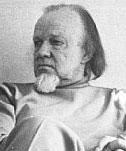
Francis A. Schaeffer


Francis A. Schaeffer (1912 - 1984)
__________________________
Francis Schaeffer was a Presbyterian minister with an ability to see how the questions of meaning, morals, and value being dealt with by philosophy, were the same questions that the Bible dealt with, only in different language. Once an agnostic, Schaeffer came to the conclusion that Biblical Christianity not only gave sufficient answers to the big questions, but that they were the only answers that were both self-consistent and livable. With this conviction he became a man of conversation.
Schaeffer taught that God is really there and He is not silent. He had spoken to man in the Bible as and a result we could have "true truth" about God and man. Knowing the dignity of man created in God's image, he placed a high value on creativity as an expression of that image. He opened his Swiss home to travelers to discuss these things. Later he began lecturing in universities and writing a number of books.
[the photographs and biographical sketch above were taken from "The Shelter," a Francis A. Schaeffer site]

S.T.S. 1.5 [Closing Comments]


As I bring this issue to a close, I’d like to plug a new book that should eventually find its way into the hands of every Believer. Allow me to preface this particular promotion by saying that the featured resources that I connect you to each month deserve your attention (even if you take just five minutes to click the provided link for a quick browse). It is an important objective of mine to provide you with needed access to Biblical, theologically-sound, intellectually-stimulating & clear-headed items (be they books, articles, ministry web-sites, etc.) amidst a growing sea of choices.

Ah, we have been truly impacted by our pluralistic society. Many of these choices are, unfortunately, a waste of your time due to their basis in teachings that have no firm root in the Scriptures (as studied in their context). Many times, not only are these items a waste of your limited time, but they are even dangerous to your development as a disciple of our Lord. In any event, my point is that I seek to do my very best in providing you with many quality resources that are worthy of your time and attention. Remember . . . promoting truth and exposing error wasn’t my idea – it’s the design & decree of our God. As such, I think we would do well to think on that truth rather soberly.

Alright . . . on to the referenced resource of the month!! In this issue, I have provided you with a link to a site covering Nancy Pearcey’s latest work – “Total Truth: Liberating Christianity from its Cultural Captivity.” Let me say a quick word about the author of this fine work – Nancy Pearcey (if you’d like to see a more exhaustive piece on Nancy, just check out the linked site and click on the “About the Author” tab). In the 1970’s, Pearcey traveled to Switzerland to embark on an in-depth exploration of the Biblical Worldview under the late Francis Schaeffer at L’Abri Fellowship – a profound Christian ministry with a focus on reaching out to intellectuals, skeptics, atheists, etc. Throughout the pages of “Total Truth,” Pearcey demonstrates the fruits of her days with Schaeffer. Moreover, the striking relevancy and incisiveness of the late Schaeffer’s thinking in our post-modern day occupies every page of this masterpiece.

You would do well to get your hands on this book. Furthermore, check out http://www.half.com/ or http://www.ebay.com/ for opportunities to purchase the various works of Francis Schaeffer, a God-given intellectual to the Body of Christ. I believe that you’ll find the works of Schaeffer shocking and stimulating, as they were written in a day which found itself less-saturated in relativistic thinking. In modern times, there seems to be as much relativism and postmodernism inside church walls as without. In the final analysis, bad thinking, whether explicitly secular or “baptized” in pop.-Christian lingo in a small group, must be exposed and eradicated.

[taken from The MacArthur Study Bible & provided as a supplement to the main articles of S.T.S. 1.4 – 1.5]

I. Evidences That Neither Prove Nor Disprove One’s Faith:


A. Visible Morality [Matt. 19:16-21; 23:27]
B. Intellectual Knowledge [Rom. 1:21; 2:17ff]
C. Religious Involvement [Matt. 25:1-10]
D. Active Ministry [Matt. 7:21-24]
E. Conviction of Sin [Acts 24:25]
F. Assurance [Matt. 23]
G. Time of Decision [Luke 8:13,14]


II. The Fruit/Proofs of Authentic/True Christianity:


A. Love for God [Ps. 42:1ff., 73:25; Luke 10:27; Rom. 8:7]
B. Repentance from Sin [Ps. 32:5; Prov. 28:13; Rom. 7:14ff.; 2 Cor. 7:10; 1 John 1:8-10]
C. Genuine Humility [Ps. 51:17; Matt. 5:1-12; James 4:6,9ff.]
D. Devotion to God’s Glory [Ps. 105:3; 115:1; Is. 43:7, 48:10ff.; Jer. 9:23,24; 1 Cor. 10:31]
E. Continual Prayer [Luke 18:1; Eph. 6:18ff.; Phil. 4:6ff.; 1 Tim. 2:1-4; James 5:16-18]
F. Selfless Love [1 John 2:9ff., 3:14, 4:7ff.]
G. Separation from the World [1 Cor. 2:12; James 4:4ff.; 1 John 2:15-17, 5:5]
H. Spiritual Growth [Luke 8:15; John 15:1-6; Eph. 4:12-16]
I. Obedient Living [Matt. 7:21; John 15:14ff.; Rom. 16:26; 1 Pet. 1:2,22; 1 John 2:3-5]


If List I is true of a person and List II is false, there is cause to question the validity of one’s profession of faith. Yet if List II is true, then the top list will be also!

S.T.S. 1.5 [Things that Make Ya Go Hmmm . . . ]


Qualifier:

I’d like to preface the following thought by saying that none of the comments below should be taken to mean that smoking should be legalized for those under 18 years of age. We all know that 2 wrongs have never made a right, right?? Right!! Rather, the point of the scenario below is to give a practical example of present-day double-talk and cheap thinking. It’s ironic to me (not really) how different sets of rules (that being NO rules) seem to apply to the many politically correct, hot-button issues of our time. To see what I mean, have a read below.

In a recent “Reflections” entry on the website of Stand to Reason, Christian Apologist/Philosopher Greg Koukl offered the following thought:

“If a woman – even a teenager – even a minor – even without her parents’ consent – has an inalienable right to have an abortion (at least according to modern-day secular humanists), then how does one argue that she cannot do something less violent to her body than such a medical procedure (can we even call it that??), and less violent to the body of another human being – the unborn child – like smoking, for instance?? For the sake of consistency, how does one argue that this is no longer an acceptable choice??? If the government is willing to say that something as extreme as abortion is a private, personal choice (so much so that even the real father of the girl seeking the abortion can’t interfere), then how do they justify their own ‘paternalism’ by taking a cigarette out of the hand of a teenager because she just isn’t old enough to decide for herself?”

As a Christian, I am quickly reminded of the following passage of Scripture which we find in Isaiah 5:20-21 [NIV]: “Woe to those who call evil good and good evil, who put darkness for light and light for darkness, who put bitter for sweet and sweet for bitter. Woe to those who are wise in their own eyes and clever in their own sight.” I can’t speak for you, but the inconsistency and arbitrariness which constitutes the bulk of modern-day “thinking” and “reasoning” ought to be coming into sharp focus, especially during the hour of moral chaos in which we find ourselves living. Well . . . what a message, huh??

Hey kids . . . have an abortion – but not a smoke!?!? Go figure!!

S.T.S. 1.5 [Main Article]


“ . . . On the Nature of True Saving Faith" [pt. 2]
(the truth about “falling from grace”)


I’d like to begin this follow-up edition with a question that many of us have probably wrestled with . . . “What about those ‘Christians’ who have completely abandoned their faith? Surely they won’t inherit the Kingdom of God, will they? How can they still call themselves ‘saved’?” This could also take another form (among others) . . . “Those constantly rebellious teenagers who were killed last week ‘walked the aisle’ and said ‘the prayer’ (10 years ago in V.B.S.), so they’re certainly headed for Heaven. They’re going to have a lot of growing to do when they get there, however, as they showed no signs of their salvation here in this life.” Were you able to see the same core assumptions involved above, although the peripheral matters were altered slightly?

My brothers and sisters, there is an extremely faulty, though commonplace, assumption lurking within the very questions themselves; this being the idea that anyone who professes to be a Christian must be a true Christian indeed (period . . . no questions asked). After all, “the aisle” has been walked and “the prayer” has been prayed! Shouldn’t those things do the trick?? I mean, if we could just get them to pray this simple prayer, regardless of whether there is a recognition of God’s holiness, man’s depravity/inadequacy, God’s provision in Christ the God-man, and man’s need to be rescued from his plight, then we’re good to go; the end justifies the means, right?? Absolutely not!! Where in the Scriptures did we come up with such nonsense?

Oh, that we would “rediscover the Book of the Law,” as did Hilkiah during the days of King Josiah (2 Kings 22-23). We would do well to pray God’s mercy on us for neglecting the whole counsel of his Word, particularly whereas the doctrine of salvation is concerned. May the Lord forgive us for seeking to placate our associations with extravagant numbers as we frantically seek to keep up with a “baptized” version of the Jones’s while Christianized bait & switch methodologies are employed and rewarded. In our day of pragmatism, please learn this lesson: “means,” not merely “ends,” will be tested on that Day according to their conformity to the Scriptures. There is no excuse for the enormous lack of Biblical knowledge that pervades the Body of Christ today. Lack of this knowledge has hindered, and even destroyed, the testimony of the people of God in times past, and can also do so once again.

In short, the answer to the scenarios at the top is that we can only conclude that the subjects described were never saved to begin with. The right question, therefore, is not whether someone can “lose” their salvation, but whether they were ever truly saved at all. When it comes to the issue of eternal security/perseverance of the saints (or the “preservation of the saints by the Father through the Savior,” as I like to call it), the overwhelming testimony of the Bible on this aspect of salvation is clear -- those who have been saved will never be lost. Read that last sentence once more. Although Jesus saves completely (Hebrews 7:25) and has made perfect forever (Hebrews 10:13) those who hear His word with faith, the author of the letter to the Hebrews exhorts the readers to prove the faith they profess by their perseverance. Christ Himself first pointed this out so beautifully when He, referring to true Believers, stated: “I give them eternal life, and they shall NEVER perish; no one can snatch them out of my hand . . .” [John 10:28]. Therefore, it should be very apparent - Jesus declared that no one who has ever received eternal life will ever lose it. Once again, read that last sentence very closely.

In a moment, I’d like to tackle an oft’-used “proof-text,” used many times by those who would take issue with what I’m now teaching. Before doing so, however, a few words regarding Biblical hermeneutics (the field of sound interpretation) would be most helpful to the subject matter at hand. When seeking to rightly interpret and/or exegete any passage of Scripture, the following general principles should be applied:

(1.) The Contextual Principle – What do the surrounding verses contribute to the
understanding of this text?

(2.) The Historical Principle – What is the history of the book and its subjects?

(3.) The Canonical Principle – What does the rest of the Bible have to say on this
subject; that is, what does the whole counsel of Scripture contribute to the
discussion?

(4.) The “Cloudy-Clear” Principle - Always interpret the “cloudy” in light of the
“clear” (or the “unknown” within the shadow of the “known”); & . . .

(5.) The “Read-More” Principle - Never read a Bible verse!!! You actually heard
me correctly! When dealing with questionable/seemingly ambiguous passages
(or any passage, for that matter), we need to read a paragraph at least . . . &
probably more. On an important note related to this principle, don’t ever
memorize a verse apart from its larger context. Doing so will always come
back to haunt you at a time when “haunting” is the last thing that you need.
Please note that I did not say that you had to actually memorize paragraphs
(though certainly plausible), but just that you should be familiar with the text
of the memorized verse.

Remember . . . context – context – context!! Oh yes, did I mention context?!?!
If you would seek to understand and exercise these basic principles on a regular basis, you would build your spiritual muscle and discernment capacity like nobody’s business (and you would prove yourself to be a rare gem in today’s dense rough). It is essential that serious students of the Scriptures develop at least these basic skills. Otherwise, you leave yourself with no firm root to establish you and anchor you when the various winds of doctrine blow in your direction (and they are many these days). Aren’t you sick and tired of being blown here and there by every wind of doctrine? Most Christians don’t seem to be, at least if their actions have anything to contribute to that question.

Before us now lies a great opportunity to put some of these skills to work as we sort out the difficult meaning of a hard passage. Many times, Hebrews 6:4-6 is confidently quoted as a proof-text to provide Biblical justification to a true believer losing his or her salvation. As we will see in a moment, to use this passage in this manner will lead to major problems in the cohesiveness of Scripture. Admittedly, however, these are some of the hardest verses to understand in the entire Bible. With that said, let’s dive right in. For your convenience, I’ve included the referenced-passage below:


Hebrews 6:4-6 (E.S.V.)

[4] For it is impossible to restore again to repentance those who have once been enlightened, who have tasted the heavenly gift, and have shared in the Holy Spirit, [5] and have tasted the goodness of the word of God and the powers of the age to come, [6] if they then fall away, since they are crucifying once again the Son of God to their own harm and holding him up to contempt.


For starters, many Scripture passages make it unmistakably clear that “true” salvation is eternal [cf. John 10:27-29; Rom. 8:28-30; Phil. 1:6; & 1 Pet. 1:4-5]. The Holy Scriptures are rife with references to the believer being “preserved,” “kept,” “sealed,” “hid,” etc. The new life that we have in Christ Jesus is indeed “everlasting.” I ask you to recall hermeneutical principles 3 & 4 above in light of the preceding statements. Moreover, those believers (though truly sincere) who want to make these verses mean that believers can truly lose their salvation will have to admit it would then also say that one could never get it back again. To see what I mean by that, read our passage again very carefully. On the contrary, these verses more likely refer to “Christianized” (yet still unregenerate) Jews who were apt to “tuck tail and run” when the fires of persecution were fanned. Other synonyms that could be substituted for these folks are “tares” (see Matthew 13:26-30; 36-43), “religious-but-lost” church members (and they aren’t few), “apostates,” etc., etc. For these “professed” Christians who absolutely refuse to progress in the faith, there are some woeful and troubling consequences, as well as a distinct prognosis of their true spiritual condition.


To whom is the writer speaking??? Surely these are genuine believers, right? Not necessarily so!


Hebrews (a masterpiece on the “Superiority of Christ”) offers a fair amount of information about the original recipients and their situation. Confusion abounds as to the subjects to whom the writer of Hebrews is writing: whether saved or lost, particularly Jew or Gentile, carnal or spiritual, and whether the situation presented is literal or hypothetical. The original readers look to have been familiar with certain concepts and imagery drawn from the Old Testament (i.e., they were interested in the Old Testament sanctuary, sacrificial system, and priesthood). They had not heard the Gospel (Good News) directly from Jesus, but from apostles (2:3), had faced previous persecution (10:32-34), and were facing present persecution, including expulsion from “familiar” Jewish institutions (13:12,13). They were in danger of falling away, perhaps fearing death (2:14-18), although their faith had not yet led to martyrdom (12:4). Drawing these features together, we can surmise that the recipients were professing Jewish Christians of the Dispersion (the scattering of Jews outside Palestine). Apparently the temple was still standing and its sacrificial rituals were being performed (10:2,3,11). Perhaps the situation is that of the persecutions under Nero (c. A.D. 64). In that case, the suffering mentioned in 10:32-34 could have been caused by the edict of Claudius, which expelled Jews from Rome in A.D. 49 (Acts 18:2). Subject to suffering and shame for their confession of Jesus, stripped of the familiar and visible institutions of organized Jewish religion, and confused by the hidden character of Jesus’ glory (veiled in suffering when He was on earth and now hidden in Heaven), the readers are tempted to turn away from the faith (10:38,39), to fall into unbelief and so to give up their pilgrimage towards God’s rest and God’s city (4:1,2,11; 11:10, 14-16; 13:14).

The highly regarded New Commentary on the Whole Bible by Jamieson, Fausset, and Brown, along with some miscellaneous commentary notes from pastor-teacher John MacArthur, will help to guide us through these deep theological waters. Please keep reading . . .


“A proper interpretation of this epistle requires the recognition that it addresses 3 distinct groups of “Jewish” people: (1) Believers; (2) unbelievers who were intellectually convinced of the Gospel; and (3) unbelievers who were attracted by the Gospel and the person of Christ but who had reached no final conviction about Him. Failure to acknowledge these groups leads to interpretations inconsistent with the rest of Scripture (and “the Scriptures cannot be broken,” according to our Master). The primary group addressed was Hebrew Christians who suffered rejection and persecution by fellow Jews (10:32-34), although none had yet been martyred (12:4). The letter was written to give them encouragement and confidence in Christ, a far superior (spotless/unblemished) High-Priest and sacrifice. They were likely an immature group of Believers who were tempted to hold on to the symbolic, but spiritually powerless, rituals and traditions of Judaism. The second group addressed was Jewish unbelievers who were convinced of the Gospel’s truth but who had not placed their faith in Jesus Christ as their own Savior and Lord. They were intellectually persuaded yet spiritually uncommitted. These folks are addressed in such passages as 2:1-3; 6:4-6; 10:26-29; and 12:15-17. The third group addressed was Jewish unbelievers who were not convinced of the Gospel’s truth but had some exposure to it. Chapter 9 is largely devoted to them.”

From the “Introduction to Hebrews”, pp. 1895-1896
The MacArthur Study Bible
Word Publishing, 1997


“These verses are difficult to interpret because it is not fully clear who the writer is speaking of and what it means to renew them again unto repentance. Some say the people are Jewish Christians who, desiring to return to Judaism (in light of an increasingly hostile atmosphere), would lose their salvation. Still others say that the people are ‘professing’ Christians who ‘apostatize’ from the faith (again, in light of growing persecution) and thus show that they were never really believers (see 1 John 2:19 and the case of Simon Magus in Acts 8). Those who apostatize (fall away) from the faith do so willfully; it is therefore impossible for these people to repent (Morris) – which, of course, means that it is impossible for these people to obtain salvation. Lindsell said, ‘Whatever view is taken about the state of an apostate prior to his apostasy, the outcome is the same. Whoever openly and consciously rejects Jesus Christ is unregenerate even if he seemed to have been saved earlier. The Arminian would say he had lost his salvation; the Calvinist that he never had it. Either way, the result is identical.”

New Commentary on the Whole Bible
Jamieson, Fausset and Brown


Now, let’s unpack this suitcase piece by piece . . .


Once Enlightened – This speaks of increased awareness brought about by the truth of the Gospel; by the light of Christ. This, by sheer necessity, is inevitably accompanied by some degree of intellectual perception (but not “reception,” per se). We should not prematurely equate “enlightenment” with salvation (see John 1:9).

Tasted of the Heavenly Gift – This indicates at least an initial, surface-level experience of or exposure to God’s gift in Christ (see John 4:10). Many Jews during the Lord’s earthly ministry experienced the blessings of Heaven that He brought – healings, deliverance from demons, eating the food He created miraculously (John 6), etc. Again, however, experience should not be viewed as the equivalent of salvation in the final analysis.

Partakers of the Holy Spirit – “Shared in the Holy Spirit” (NIV); without faith, however, proximity to God in the fellowship of His covenant people is no blessing; rather, it subjects apostates to more severe judgment . . . be so very careful as to what you expose yourselves to, for further exposure creates further accountability/responsibility. The concept of partaking is used in 3:1; 3:14; & 12:8 of a relationship which believers have; however, the context must be the final determining factor. If I said: “Boy, that was a gay affair,” what would I be conveying? Remember . . . context – context – context!

Tasted the Good Word of God – They were repeating the sins of those who died in the wilderness [after seeing] the miracles of God performed through Moses and Aaron and [after hearing] the voice of God at Sinai. If you’ll recall, these Israelites were supposed to go into the Promised Land, but then refused to enter. This should tell us something big about lost people; namely, that the lack of evidence isn’t as problematic in the life of the unregenerate man so much as the suppression of evidence. The previous comment should not be taken to mean that there is no “evidence” for the Christian faith or that the study or presentation of “evidence” is futile or sinful. There is an appropriate place for those endeavors, but a detailed explanation of that place is not the purpose of this issue. The New Commentary on the Whole Bible goes on to say that “a person can experience many of the same blessings as genuine Christians do and then later reject the faith. Such rejection is called apostasy.” Like Simon Magus (Acts 8:9-24) or Judas Iscariot, these Hebrews had not yet been regenerated in spite of all they had heard and seen (cf. Matthew 13:3-9; John 6:60-66).

The Powers of the World to Come – Most obviously, the signs and wonders that accompanied the introduction of the Gospel. We should take note here that these folks are not described with any terms that the Scriptures apply only to Believers (holy, born again, righteous, or saints).

[It’s Impossible] If They “Fall Away,” to Renew Them Again Unto Repentance – If those who toy with Christianity become unsettled and decide against Christ, they are no longer undecided, and their personalities will likely crystallize around that decision. After crossing this point of no return, it can be said that they would not repent (and one could see why). Those who sinned against Christ in such a way had (and still have) no hope of restoration or forgiveness (cf. 2:2,3: 10:26,27; 12:25). The reason is that they rejected Him with full knowledge of what they were doing. With full revelation they rejected the truth, concluding the opposite of the truth about Christ, and thus had no hope of ever being saved. They could never have had more knowledge than they had when they rejected it. To reiterate an earlier point, those who want to make this verse mean that Believers can lose salvation will have to admit that it would then also say that one could never get it back again . . . “twice lost – always lost.”

They Crucify to Themselves the Son of God Afresh – By their final decision, they join the side of those who put Him to death; that is, by renouncing their faith in Christ, they (by default) declare that Christ’s cross is not a holy (justified/valid) sacrifice for other’s sins, but rather the deserved execution of a guilty criminal (10:29). They have concluded that Jesus should have been crucified, and they stand with His enemies. When the work of Christ is consciously rejected and spurned, what other sacrifice/remedy is left for sins (see John 14:6 and Acts 4:12).


IS THE SITUATION IN VERSE 6 HYPOTHETICAL OR LITERAL???


Only after finally realizing – in light of the larger testimony of Scripture – that the situation of verse 6 is presented in the context of apostasy did I settle on the literal interpretation. The hypothetical is simply not clear, making that rendering even more suspect. Upon much reflection, I can say that these verses are literally talking about people who are “tares” (see Matthew 13:26-30, 36-43). In other words, they look like Christians on the outside, but have never been born again on the inside. This thoroughly Biblical theme makes the religious-but-lost concept even more critical. If the falling from grace crowd would ever fully realize and accept the extent of the religious-but-lost problem, it could potentially solve this debate. They would see the multitudes of apostates not as having lost their salvation, but having never had it in the first place. At the risk of sounding repetitive, the subjects of Hebrews 6:4-6 were unbelievers who had been exposed to God’s redemptive truth, and perhaps had even made a profession of faith, but had not exercised genuine saving faith. As in Hebrews 10:26, the reference once again is to apostates (“tares” who apostatized/fell away during tough times), not to genuine Believers who are often incorrectly thought to lose their salvation because of their sins.

In conclusion, the false doctrine often labeled “falling from grace” comes in large part from a misunderstanding of this text (although there are more) and that is very unfortunate. The teaching of eternal security has strong Biblical justification; as such, it is not merely a “denominational darling,” per se, invented to make excuses for licentious living or to soothe our lives as some sort of “fire-insurance policy” alone. This is not simply a narrow-minded Baptist or Presbyterian dogma that we blindly hold-on to for the sake of tradition . . . God help us if that’s the case!! Since I am an “equal opportunity picker” (I stole that one from my Pastor), there is much modification that needs to be made on the parts of both your avg. Baptist (weak/carnal version of preservation called “once saved, always saved”) and those who take a position against a valid/clear Biblical teaching. I have abandoned the frequently heard statement, “once saved, always saved” (as it can be sorely misleading) in honor of a more sound Biblical theology and phraseology. If there was even a possibility that a true Christian’s salvation could abruptly end, the Word itself is fatally flawed and the hope of living forever in Christ is conditional on the works of humanity (our ship would be “sunk” every week if that were the case). Brethren, as you struggle with and handle the revealed Word of our Lord with much fear and trembling when you rise up, when you lie down, and when you walk in the way, I pray the Lord would be your Guide.

In the August 2005 issue of Scratching the Surface, my great friend and accountability partner, Daniel Copeland, will come on board to do a little “surface scratching,” as he tackles the issue of rightly handling the Word of truth in greater detail than I have here. I’ve seen the bulk of that article already and am thankfully excited for what our Lord has in store for you all in S.T.S. 1.6. To God be the glory, great things He has done!


You’re bound to slip “on-board,” but you won‘t fall “over-board!”

S.T.S. 1.4 [Closing Comments]


I bring this issue to a close by offering some thoughts on how certain aspects of American culture (as it now stands) have contributed to the "fragmented spirituality" practiced by many "professing" Believers.

Here in America, we have grown accustomed to a way of life that basically tends to separate who we are (beliefs & values) from what we do in a sense (actions-behavior-conduct). If you don’t believe that, just open your ears during election season!! This mindset, in turn, has slowly crept into American Evangelicalism.
In America, we so over-compartmentalize our lives that the only consistency in us is the fact that there is none. If there ever were such a thing as a walking, breathing "oxy-moron," it would have to be the run-of-the-mill American whose thinking has been taken captive by the prevailing ideas and notions of popular culture. Unfortunately, this is all-too-commonplace in many Churches. I’m willing to bet (not really) that this is an underlying principle in the following scenarios which I’ve devised to make the point:

1. Your co-worker claims to be a born-again Christian, but he sees no correlation between his
"beliefs" and his work ethic. Better yet, he sees no problem hitting the local pub after work to
have a drink with the crew. I mean, after all, who are we to judge? "I’m not the role model
Christian," he affirms, "but at least I am a good ol’ boy." (all the while, he never sees the
inconsistency)

2. Your friend (not being the beacon of personal integrity) believes her personal, private lifestyle has no bearing on her professionalism at work. She facilitates classes on leadership skills while
on the job, but is a loser with her husband/kids at home. "What I do behind closed doors
doesn’t affect anyone but me," she says every now and then.

3. A nameless Senator (running for President) claims that his personal belief is that life is a gift
of God that begins at conception. Unfortunately, this type of belief (since it wreaks of
Christianity) has no place in this candidate’s contradictory public policy ideas. "I have to
uphold the U.S. Constitution, which calls for a strict separation of Church & State," he whines.
(No, John, it doesn’t . . . read it again – this time in context, please sir!)

4. Multitudes of professing "Christians" believe that they have their "fire-insurance" (after all,
they have walked an aisle . . .). "Whether we choose to ever live for Christ is entirely another
matter," they say. (Maybe I’m missing something, but what about passages such as Matthew
7 & 13:24-30; 36-43/John 3:36/2 Corinthians 5:17 & 13:5/Ephesians 2:10/ and James 2:14-
26? Also be sure to re-read this month’s quote, which sums things up nicely.)

I think there may be a common denominator running through the very heart of the 4 common scenarios above. What about you?

Until next month’s issue . . . . . . . don’t be ashamed to peel back those Surfaces in order to see what’s worth holding on to. Some will thank you for doing so, while many others (Christians included) will seek to marginalize you for it. When everything is said and done, however, at least you can say that you escaped the shackles of a mere day-to-day existence in order to get outside of the box. I want to warmly wish you a Merry Christmas & Happy New Year!!

S.T.S. 1.4 [Q&A 101]


[Subject – Cults!!]


Question:
"What is a ‘cult?’ More specifically, what differentiates a cult from simply another ‘denomination?’ "

Answer:
Simply put, a "cult" (as it pertains to the Christian faith), is a group that claims to be Christian in nature but that deviates from the ESSENTIAL doctrines of classical Christianity. That is, members of Christian cults such as the Latter-Day Saints (Mormons) or the Watchtower Bible & Tract Society (Jehovah’s Witnesses) fall outside of the "pale of orthodoxy." Some doctrines that are in view here are the authority of Scripture, Person & work of Jesus Christ, the nature of God (monotheistic or polytheistic), the Trinity, sin, the resurrection, the way of the cross (Jesus as the ONLY Way to the Father), state/condition of the human heart, etc.Remember this -- in ESSENTIALS . . . Unity; in NONESSENTIALS . . . Liberty . . . and in ALL THINGS . . . Charity!! Denominations do not exist due to deviations/variances on ESSENTIAL Biblical teaching, but rather deal more with certain NONESSENTIAL concerns. Items in this category could range from one’s view on baptism (i.e., immersion, sprinkling, or pouring), to a person’s take on capital punishment, to an individual’s stance on "last days" or "end times" chronology, etc. By the way, neither the essential nor the nonessential lists above are completely exhaustive (specifically the latter list of nonessentials).

In that light, the various denominations that fall under the larger umbrella of Christianity are inevitable when you consider many dynamics. In essence, two Christians can take opposing sides on a "secondary" issue and still be Christians all the while in good fellowship with one another. Remember, secondary doesn’t mean unimportant!!On this note, we need to be able to disagree without being disagreeable. This is not to say that truth cannot be discerned on these nonessential issues; furthermore, I never want to give the slightest impression that those who disagree on secondary concerns should never flesh these things out with one another. In fact, I would encourage believers to dialogue about "secondary differences" in light of Biblical & historical context, "age" of the particular stance relative to Christian history, etc. On the other hand, however, we must be careful not to become embittered against brothers and sisters who differ with us on the non-essentials. When we begin to lean in that direction, we become very legalistic very quickly; this is something that we need to guard against. On these issues . . . may the best idea win!!


To explore this very issue a bit further and in more depth, I refer you to the following helpful articles:

1. What Is Christianity?http://www.str.org/free/commentaries/theology/whatis.htm

2. The Essentials of Christianityhttp://www.equip.org/free/CP0701.htm

S.T.S. 1.4 [Main Article]


. . . On the Nature of True Saving Faith . . .[pt. 1]
("Faith ALONE saves, but the faith that saves IS NEVER ALONE!")

I don’t know about you, but I truly believe that American Evangelicals have missed the boat entirely whereas the nature of true Biblical salvation is concerned. As far as I can see, this issue rests (at least in part) upon an overemphasis on a questionable teaching that we will call "Carnal Christianity." By "Carnal Christianity," I am referring to the popular and appealing (but historically recent – say 50-60 years) notion that one can be truly regenerate/"saved" and not show the slightest hint of that throughout their lifetimes . . . & still get heaven upon departing this life. This is false, at least in my estimation.

The foundational problem is our understanding of "conversion" as a mere human decision (on this view, one could choose not to grow or, better yet, to remove themselves from the saving grip of God) instead of a supernatural working of God whereby the very NATURE of the individual is changed.Make no mistake about it – one becomes a child of God through the regenerating work of the Holy Spirit! The "heart of stone" (which is unresponsive to God) is removed and replaced with a "heart of flesh" (that responds to God). Before conversion, one is inclined to the things of the flesh and sin. After conversion, one is given to the things of the Spirit and holiness. The notion that we have any sort of freedom apart from the governance of God is not a Biblical concept, for it is in Him that we live, move, and have our being. We do not simply adopt a new set of rules and force ourselves to live by them, but rather we become a "new creature" that DESIRES a new set of rules according to the very nature, character, and will of God.


The references to "carnality" are to be explained in their context:

1. It should never be denied that: [a] all new believers must grow from carnality and immaturity into a spiritual and mature walk with Christ; [b] even mature believers may act carnally and immaturely.

2. What is to be denied is that a truly "regenerated" person can live in a constant state of carnality without growth to maturity and the bearing of fruit – this is the popular (but Biblically absent) doctrine of the "Carnal Christian" that has done so much damage to the Church (especially in the U.S.A.).

3. Many of the "Christians" in Corinth were indeed acting in the flesh. Paul attacks this problem in 2 ways: [a] 1st, he admonishes them that believers are not to act in such a way; [b] 2nd, he warns them that if they CONTINUE in the flesh WITHOUT REPENTANCE, it could very well be the evidence that many of them are still "unregenerate" (2 Corinthians 13:5).

4. Many true Believers are indeed delayed in the process; & not all progress at the same rate or pass away at the exact same mark (we know this from the rewards system in heaven) . . . but, a huge distinction must be made between delayed growth & no growth at all.

The teaching of the Scriptures is clear – the genuine Christian will walk in the way of the Lord or on the "narrow path" (Matthew 7), not because of his greater will or discipline, but because God has made that person into a new creation for His glory. John Piper once stated that "the Christian disciple serves Christ Jesus in the power with which he or she is served BY Christ Jesus"; furthermore, Christ is not the lucky beneficiary of His trusted Christian benefactors. Christ Jesus is the Initiator and He thus gets ALL of the glory, for from Him and through Him and to Him are all things forever and ever, amen. When the true Believer steps off the "path," he is "convicted" and even "disciplined" by a loving/caring Father (Hebrews 12:5-11) until he returns. If a "professing" Christian steps off the path and begins to bear the fruit of the unbeliever, he can have no assurance of ever being saved/rescued. If he returns to the path, then this is a confirmation of his salvation and the foundation of his assurance. If he does not return to the path, it is a great evidence of his "unregenerate state."To say that a true Believer's life can be consistently characterized by an unrepentant, happy-as-you-sin-regardless pattern is foreign to the testimony of much Scripture.

Therefore, based upon this very testimony, I must take the position that the teaching of co-called "Carnal Christianity" (again, not Christians who can act carnally) is shaky, weak, & Biblically unfounded. If you are truly justified (in right standing with God [positionally]), the Scriptures declare that you shall be truly sanctified (progressively set apart) & truly glorified (our ultimate redemption, to which we should look forward with eagerness). It has been rightly said that "I'm not what I want to be (sanctification); I'm not what I'm gonna be (glorification); but thank God I'm not what I used to be (justification)!"

Once again - to say that one can be justified & not sanctified is just not good theology. It is God who saves, God who preserves us, God who works through us, and God who will raise us up on that that glorious day . . . with that said – Glory to God in the highest!! All of us must think soberly on these truths in this day when our substance (not our style) seems to have more in common with the fluctuating ideas of pop-culture than it does with the principles of Christ.

S.T.S. 1.3 [Concluding Remarks]


Concluding Remarks:


In the process of doing some background work in preparation for this month’s issue, I came across a great piece that summarizes my basic rationale throughout the feature article. In closing, I’d like to share it with you here:

"In May, 1994, Congress passed a law making it a federal offense to block an abortion clinic. Pamela Maraldo, President of Planned Parenthood at the time commented to the press, ‘This law goes to show that no one can force their viewpoint on someone else.’ The self-contradiction ought to be obvious: All laws force someone’s viewpoint."(Gregory Koukl, Christian Apologist, Stand To Reason)

No, Ms. Maraldo, a particular brand of "morality" was legislated in May ’94, one that doesn’t conflict with your worldview (hence, your satisfaction with the decision). Again . . . see what I mean? I encourage you to listen closely to what people say, for many times, the devil is right there in the details!

Legislating Morality! It's not 'IF' or 'WHETHER,' but 'WHOSE!'


Legislating Morality -- The REAL Issue . . .
(it’s not "IF" or "WHETHER," but "WHOSE")


"Please remember this . . . all law/legislation is someone else’s view of right/wrong that is imposed on another!! America has legislated morality since her beginnings, and rightly so, for we would have chaos and anarchy if that were not the case. However, this brand of politically-correct rhetoric should clearly show us that much of the thinking within America (& within Christendom) is about a mile wide and an inch deep." (Scott, 10/2004)


. . . and since then: [Presidential Debate #2 Excerpt]

GIBSON:
"Going to go to the final two questions now, and the first one will be for Senator Kerry. And this comes from Sarah Degenhart."

DEGENHART:
"Senator Kerry, suppose you are speaking with a voter who believed abortion is murder and the voter asked for reassurance that his or her tax dollars would not go to support abortion, what would you say to that person?"

KERRY:
"I would say to that person exactly what I will say to you right now. First of all, I cannot tell you how deeply I respect the belief about life and when it begins. I'm a Catholic, raised a Catholic. I was an altar boy. Religion has been a huge part of my life. It helped lead me through a war, leads me today. But I can't take what is an article of faith for me and legislate it on someone who doesn't share that article of faith, whether they be agnostic, atheist, Jew, Protestant, whatever. I can't do that. But I can counsel people. I can talk reasonably about life and about responsibility. I can talk to people, as my wife Teresa does, about making other choices, and about abstinence, and about all these other things that we ought to do as a responsible society. But as a president, I have to represent all the people in the nation. And I have to make that judgment. Now, I believe that you can take that position and not be pro- abortion, but you have to afford people their constitutional rights . . . that's why I think it's important for the United States, for instance, not to have this rigid ideological restriction on helping families around the world to be able to make a smart decision about family planning. . . . you'll help prevent unwanted children, unwanted pregnancies. You'll actually do a better job, I think, of passing on the moral responsibility that is expressed in your question. And I truly respect it."

___________________________________________________________________


Wow! It’s an interesting place we’ve come to here, wouldn’t you say? On the one hand, we Evangelical Christians strongly esteem and place super-high value upon life due to the fact that mankind is created in the very image of God. This truth inevitably and naturally impacts our views and/or voting habits on issues pertaining to life, be they issues of abortion, embryonic stem-sell research, euthanasia, etc. On the other hand, however, we’re constantly told by the liberal elite that it’s simply inappropriate to "legislate" or "impose" such beliefs on those Americans who would disagree for various reasons. If you don’t see this starting to happen, I’ve only got one thing to say . . . disarm the "SNOOZE BUTTON" feature on your cultural alarm clock, because you seem to have a habit of hitting it during times like these.

From here on out, I’ll refer to this popular, albeit erroneous/flawed, line of reasoning as the "No-Moral-Legislation Fallacy." This particular mindset, which has saturated our thinking for decades, can be restated in the following ways:


As long as I don’t hurt anyone the government should leave me alone . . .

No one should force their morals on anyone else . . .

You can’t make people be good . . .

Legislating morality violates the "separation of church & state" . . .

"Big Brother" has absolutely no business in my bedroom . . .


Do you see the common thread woven throughout the preceding lines of argumentation? Namely, that it is wrong to legislate/impose "morality" on the people, specifically those who disagree with a particular moral stance. While I’ll readily grant the notion that the preceding philosophy has good rhetorical force (i.e., if one isn’t familiar with this type of rhetoric, he or she will most likely be caught off guard), it is desperately lacking in terms of strength and substance.


Why is this the case?


Allow me to offer a couple of theories on this:


1. For decades, this brand of jargon has been "spoon-fed" to us through a plethora of avenues (i.e., Hollywood, the media, activist court rulings, misguided politicians, etc.). Interestingly enough, if you were to take a certain saying, belief, argument, etc., and pound it over and over again into the thinking of a highly susceptible, non-thinking culture, you’d be amazed at the things that would become acceptable. Unfortunately, we tend to accept that which is ingrained into our thinking when we don’t think through the practical ramifications of a particular thought. Remember that ideas have legit consequences.

2. On top of the previous theory, it has "populist" appeal, in that it strongly identifies with the mindset of radical independence that has swept over our land. That is, we humans (especially Americans) don’t like being told what to do (I mean, after all, we’re depraved, capable, and know what’s best, right?) . . . HA! We could certainly camp out here for a while, but that’s for another time. In sum, Americans value what seems fair rather than what is true. Honestly, the same could probably be said of the American Church!!


As for the "No-Moral-Legislation Fallacy" lacking in terms of strength/substance, take a look at the following simplified exchange (in conversational form) which will serve to expose the basic problem:

Mike "Mustlegislatemorals":
I think it’s awesome that we have the most pro-life president in history (i.e., signing into law the Born Alive Infants Act, Partial Birth Abortion Ban, and Laci & Connor Peterson’s Law)! On that note, we have the opportunity this year to impact legislation whereas the issue of abortion is concerned; more specifically, we, the people, get to decide on the parental notification of a minor’s termination of pregnancy. I can’t believe this is even an issue, but if my child has to have my permission to take an aspirin at school, I will be made aware of a situation like this. My voice, through my vote, will be heard this year! You know, maybe abortion should be outlawed altogether.

Charlie "Cannotlegislatemorals":
Mike, you certainly have the right to believe whatever you want to believe, but the fact of the matter is that things have changed and we’ve made a lot of progress as a society. In fact, it has been well-said that America is going through "collective puberty." Besides, it’s common knowledge these days that moral imposition is off-limits, especially whereas the government is concerned. We cannot impose or legislate morality . . . it’s simply wrong . . .

Mike "Mustlegislatemorals":
Is that, then, your "morality?" In other words, is your belief that you cannot impose morality "your morality?"

Charlie "Cannotlegislatemorals":
Well . . . ummm . . . I’ve never really looked at it that way, but if that’s what you want to call it, then fine . . .

Mike "Mustlegislatemorals":
Since that is "your morality," whether you’d like to admit to it or not, then why are you "imposing" it on me (and the others who dissent)? Why will you be seeking to "impose" your brand of morality on those who disagree with you by "your vote" on the issue?

Charlie "Cannotlegislatemorals":
Huh???


Do you more clearly see the basic problem?


It’s not a matter of whether morality can be legislated, but WHOSE morality will be legislated. Don’t ever forget that!! In fact, if you get nothing else from this month’s issue, make sure you grasp the preceding point. ALL law/legislation is someone’s view of right and wrong that is imposed on another. Much like the man who says there are no absolutes (which would have to be "absolute" in order to be "true"), people who hold to the "No Moral Legislation Fallacy" are walking contradictions. In other words, you can’t get away from the legislation of morality, no matter whose brand of moral principles is eventually imposed.

Therefore, after taking more of a rational look at this issue, I must conclude that if we abandon the legislation of morality (which is inherently impossible), we must, in turn, abandon the rule of law itself. If you’d like to see a recipe of disaster for societal stability, just take a stroll down that street.


In closing, I’d like to alter the Q&A piece from presidential debate #2 to even better illustrate the inherent weakness of the "No-Moral-Legislation Fallacy." As you’ll quickly notice, I’ve made two alterations [for illustration purposes ONLY]: (1) The subject of Degenhart’s question is a pro-choice voter; & (2) Kerry is a CONSISTENT pro-life politician (i.e., if a thing is wrong personally, then it should follow that it is wrong whereas public policy is concerned).
Buckle up and watch what happens here . . .

GIBSON:
"Going to go to the final two questions now, and the first one will be for Senator Kerry. And this comes from Sarah Degenhart."


DEGENHART:
"Senator Kerry, suppose you are speaking with a voter who believed abortion is the sole right/choice of a woman and the voter asked for reassurance that his or her tax dollars would be able to support that very right, what would you say to that person?"


KERRY:
"I would say to that person exactly what I will say to you right now. First of all, I cannot tell you how deeply I respect your right to believe what you want to believe even though I strongly disagree with your stance. As for me, I'm a Catholic, and I was raised a Catholic. I was even an altar boy (can you believe that . . . me, an altar boy?). Religion has been a huge part of my life. It helped lead me through a war, and it leads me today (because I want the votes of a certain constituency). But I can't take what is an article of belief for you personally and legislate it on someone who doesn't share that belief, be they unborn child, pro-lifer, whatever. I can't do that. But I can still be your President and have this difference of belief with you. As a president, however, I have to represent all the people in the nation, including the unborn children who have no voice but us. And I have to make that judgment. Now, I believe that you can take that position and not be pro-life, but you have to afford people their constitutional rights . . . that's why I think it's important for the United States, for instance, not to have this rigid ideological restriction on helping the unborn child, politically correct or not."


Beloved, the same principle that was at work in the true account of that exchange was at work in the above illustration, even though it was admittedly modified to make the point. Kerry’s philosophy that he is personally against abortion, but wouldn’t legislate his views on others who disagree, was completely erroneous. In the first place, by refusing to display the principled discipline to stand up against his pro-abortion constituency and defend the unborn, he was essentially imposing his views on others – the babies – by default!!! Do not forget that, my friend!! In one sense they are the only innocent ones in this situation. Secondly, as previously stated, we do (and must) legislate morality. Our entire system of criminal law and much of our civil law is based on our moral beliefs, from larceny to rape to pre-meditated murder.


As has also been said here, if we don’t legislate morality, we forfeit the rule of law, societal stability, and ordered liberty all together. Think, right now, about other moral issues that we legislate on but which are not necessarily hot-button issues at the moment . . . murder – rape – assault & battery – petit theft . . . etc. Are you seeing what’s happening? I want you to think through these things!!


When someone gives you a variation of the "No-Moral-Legislation Fallacy," ask them one question . . . do you vote?? If they vote, they begin to engage in self-refutation, and that is something that we need to point out more often in our day. When you do get the chance to pull back the curtains, be sure to expose the error in a loving manner. More specifically, do so with a question rather than a statement (i.e., Maybe I’m missing something, but …). This is just a point of tactical wisdom that tends to disarm a tension-filled situation, even if you and your friend vehemently disagree on the issue.


By the way, would you like to know who else argued against "moral legislation?" You’re going to need to buckle up for this one - - - - - - - American slave owners during the time period of the civil war! That’s right! I’d encourage you to think about that one on your drive home today.


Remember: it’s not IF, but WHOSE . . .